Test before cleaning
Test after cleaning
This blog follows the emotions and practicalities of owning a Ferrari F355 GTS
Test before cleaning
Test after cleaning
Tracking files:
18. Carried out leak testing of the intake system using a smoke machine. Observed smoke emerging around the inlet pipe collars for cylinder 2 and 7, with the more pronounced leak at cylinder 7
19. Lined up timing paint mark of Bank 1 exhaust cam with timing case cover inspection window. With this mark lined up the Bank 2 intake cam is also lined up. Noticed mark for Bank 1 intake cam sits slightly out of window in the direction away from the exhaust cam. Bank 2 exhaust cam sits slightly out of window in the direction towards the intake cam.
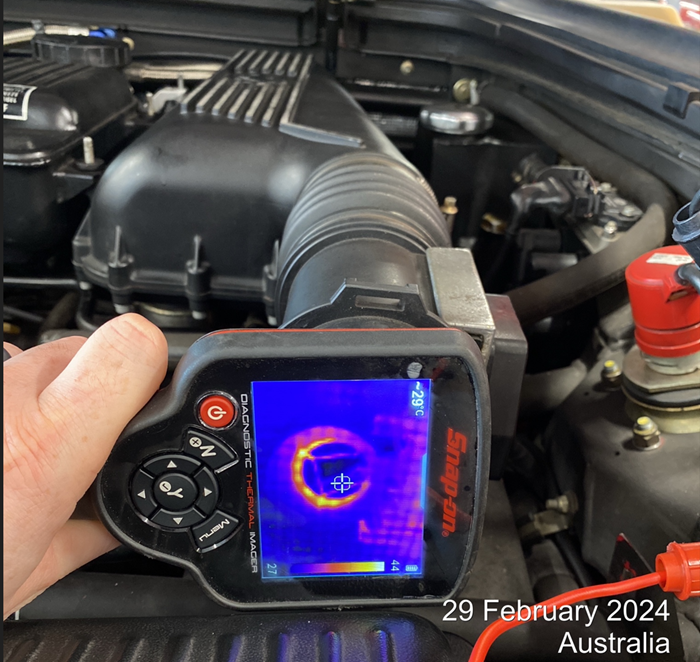
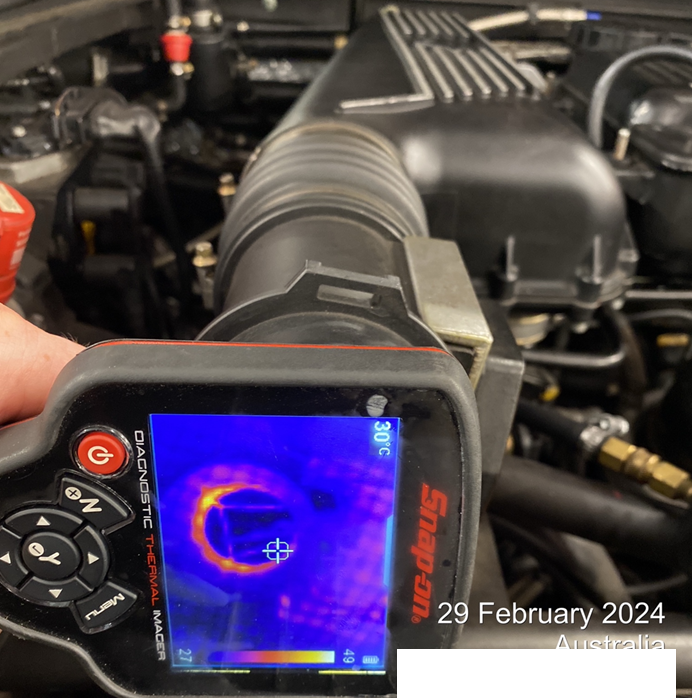
20. Used thermal camera on the hot film air flow meters and observed similar readings between both sensors of approx. 50degC.
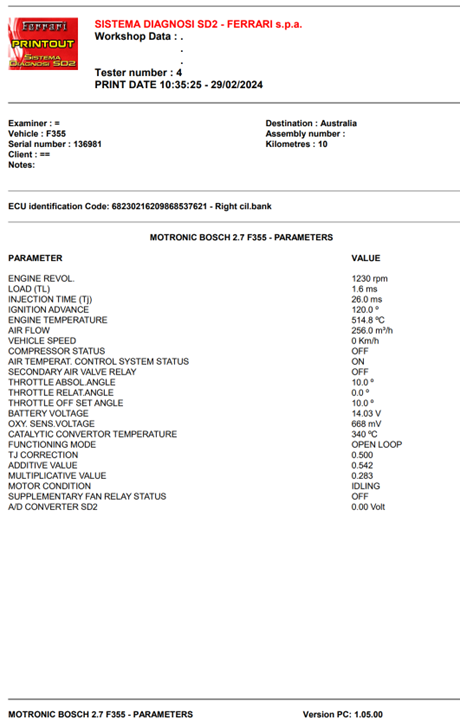
Bank 1
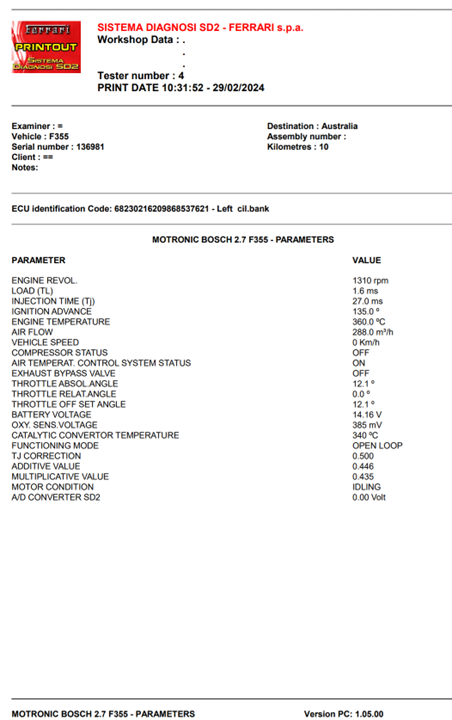
Bank 2
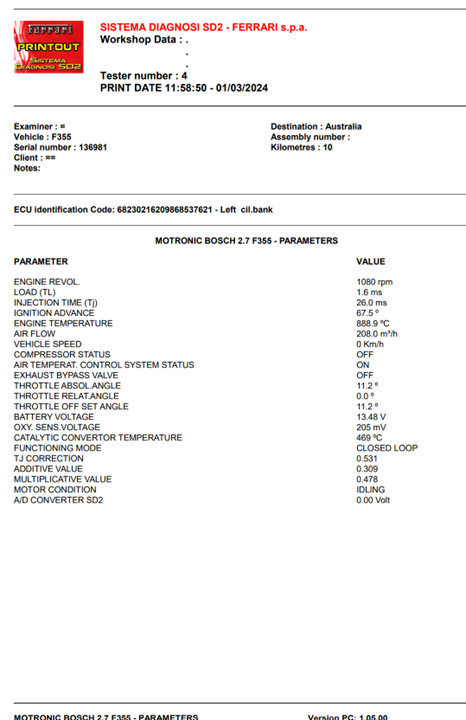
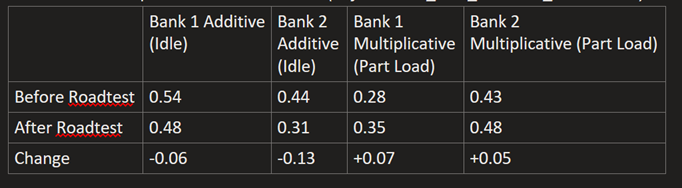
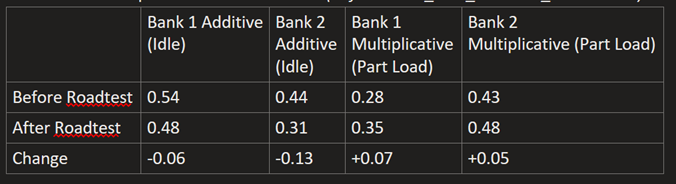
22. Ran parameter report with engine at idle and compared Bank 1 and Bank 2 readings. The engine temperature values displayed are not plausible (Bank 1 showed 514degC and Bank 2 showed 360degC). Additive fuel trim at 0.54 for Bank 1 and 0.44 for Bank 2 and Multiplicative at 0.28 for Bank 1 and 0.43 for Bank 2. Confirmed function mode changed from Open Loop to Closed loop once engine at operating temperature.
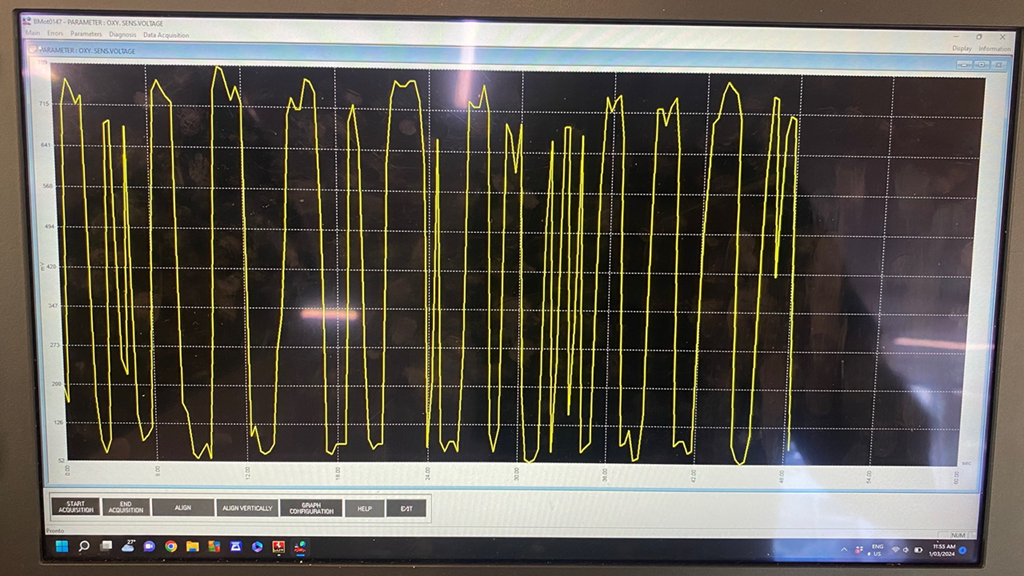
23. Ran data acquisition and cross-checked catalytic converter temperatures with thermal camera and they are plausible. Checked function of air flow and confirmed trace indicates increased air flow with increased engine RPM. Ran engine at approx. 3,000RPM and monitored readings for both sensors. Bank 1 approx. 525m3/hr and Bank 1 approx. 475m3/hr. Oxygen sensors both fluctuate correctly between lean and rich however the pattern has some anomalies.
24. Deleted errors from both Motronics. Removed all test equipment and re-assembled engine bay for road testing.
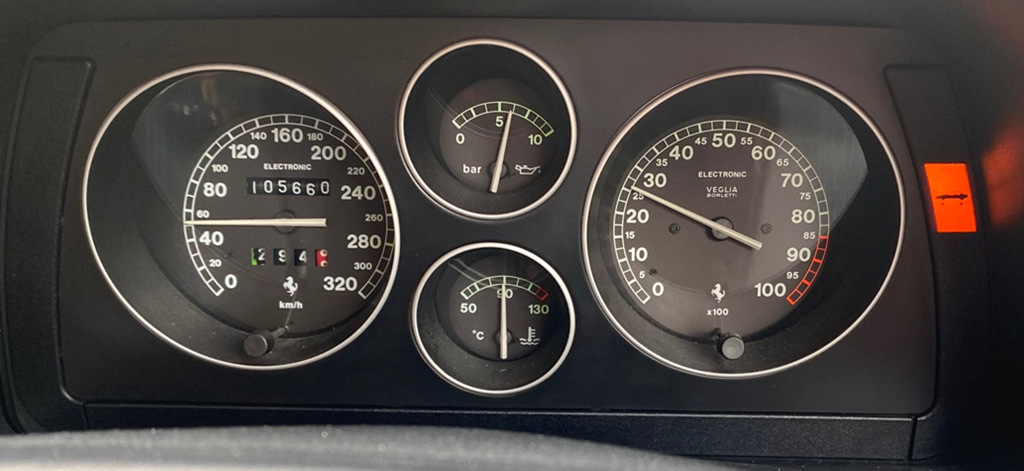
25. Roadtested, no engine related warning lights came on however suspension warning light came on after approx. 15 minutes of driving. Slightly rough idle evident throughout road test, no loss of power and was able to accelerate up hills in high hear. Found if coasting with no accelerator pedal input and then applying a very small amount of input there is a brief and minor hesitation.
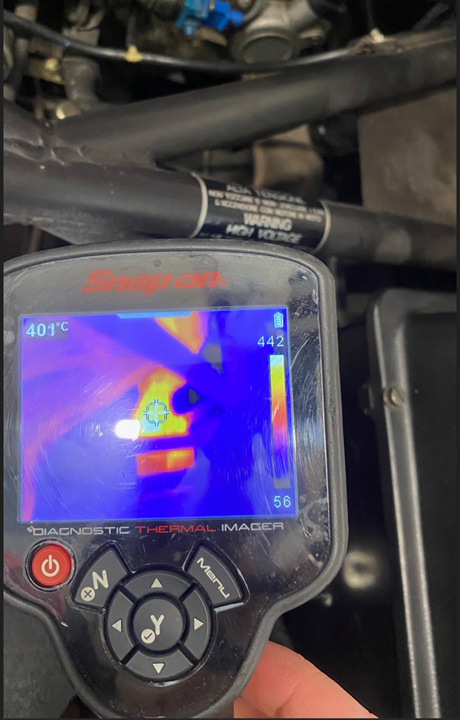
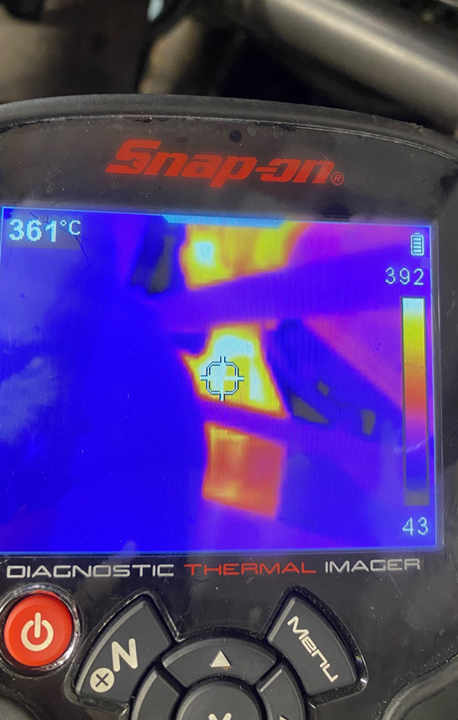
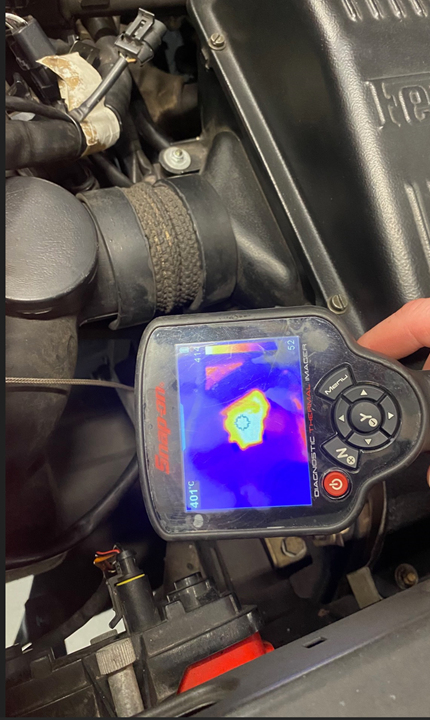
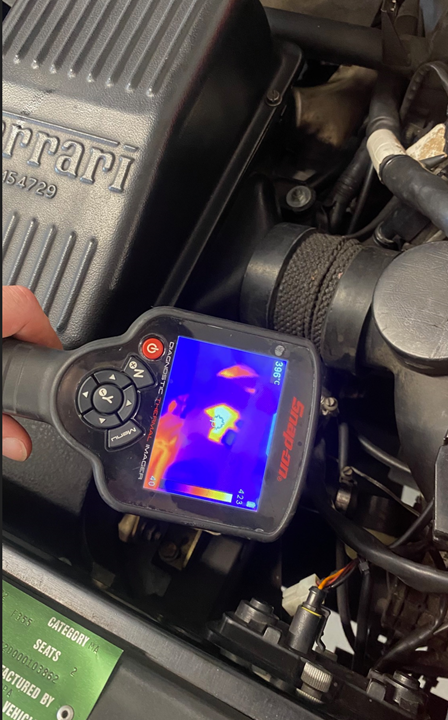
26. After roadtest used thermal camera to inspect exhaust system. No discrepancies between individual cylinders. Found Bank 1 headers at approx. 380degC and Bank 2 headers at approx. 420degC. Bank 1 cat inlet hotter though at 440degC compared to 390degC for bank 2. The outlet temperature of both cats was even at 420degC.
27. Repeated exhaust gas analysis testing post roadtest. CO and CO2 readings have reduced however HC has significantly increased, O2 is fairly consistent.
Bank 1
Bank 2
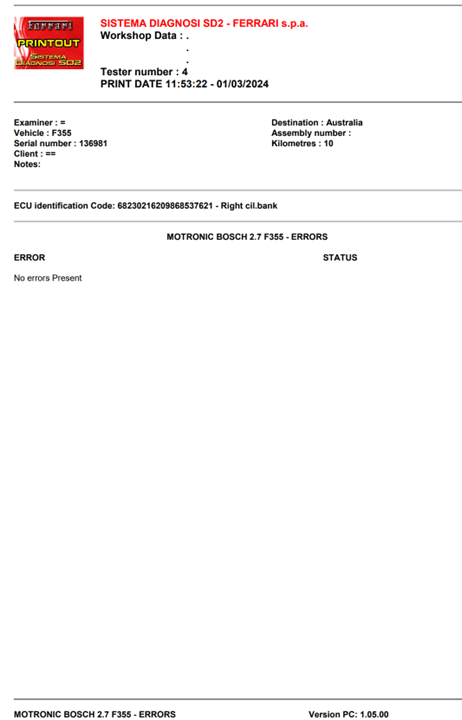
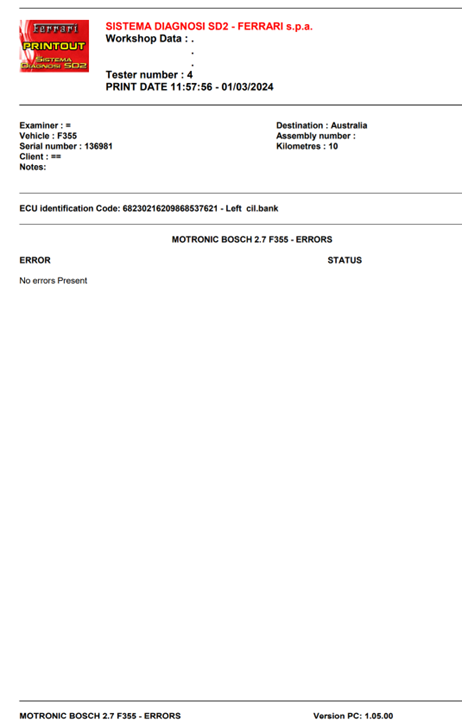
28. Checked both Motronic ECUs for errors post road test – no errors stored.
Bank 1
Bank 2
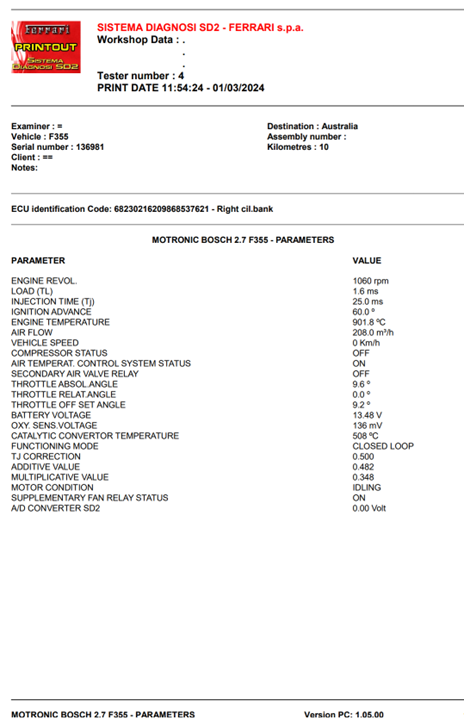
29. Read parameter report at idle post road test and compared. Checked the effect the road test and hot idle period had on fuel trims.
Bank 1
Bank 2
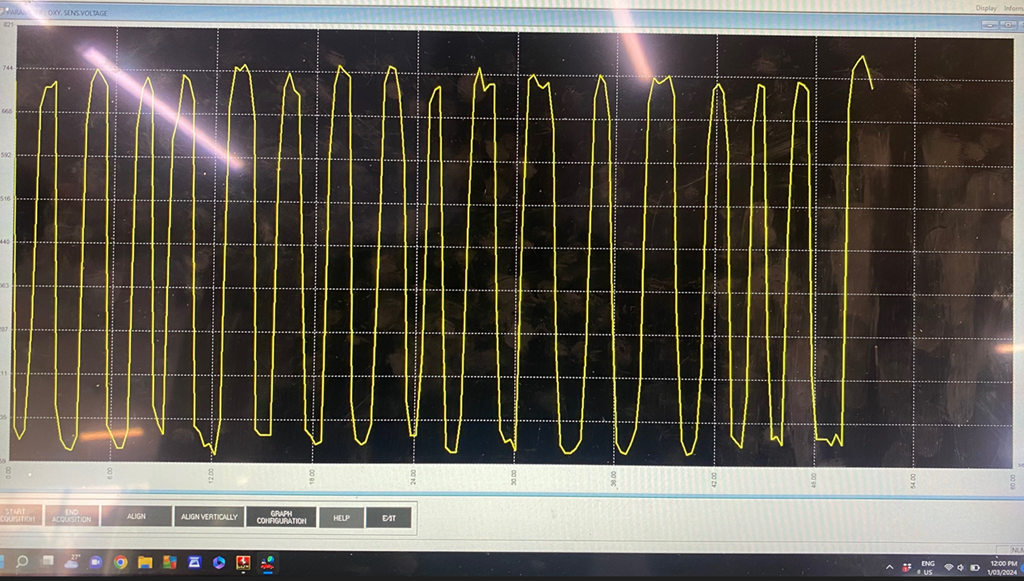
30. Repeated data acquisition of oxygen sensors post road test and found a more stabilised reading than what was originally observed.
31. Switched off engine and left for 45 minutes. Started and found engine still able to be started however there was a slightly extended crank period.
32. Road tested again after the extended crank. Slightly rough idle however no lack of power.
Recommendations
Although a number of anomalies have been observed the best course of action from here will be
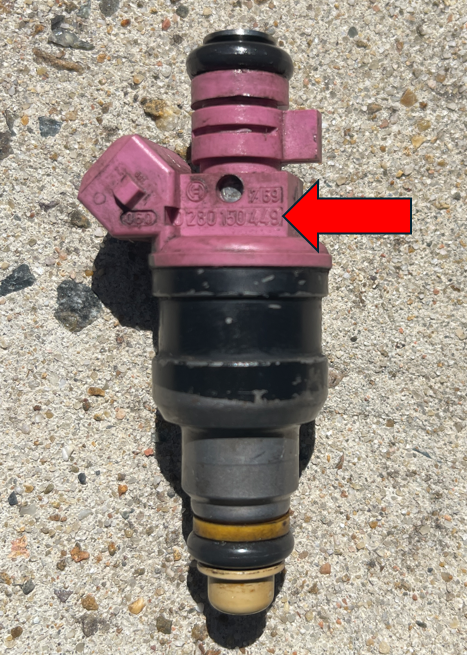
If you take a look at the injectors I was provided you can see the part number on the stem and the housing is pink as shown above.
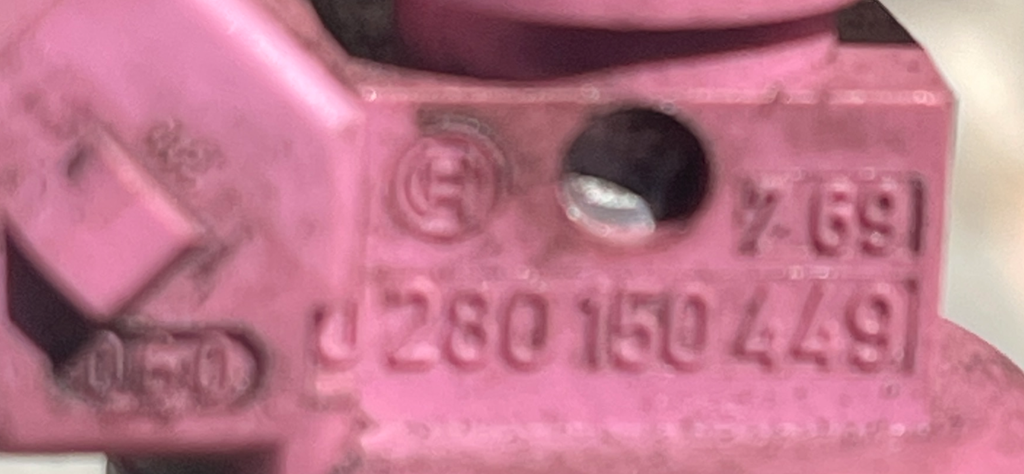
Upon closer examination you see the part number is 0-280-150-449, which from all accounts are injectors for the F355 5.2 Motronic engine.
If I look at this site:
https://aussieinjectors.com.au/injector-by-number/
I see:

I also found a local dealer for Bosch injectors and received this response to my query:
“unfortunately the Ferrari injector 0280 155 013 are discontinued without replacement or supersession.
The 0280 155 003 is a different generation injector and not a direct replacement”
As for the 0280 155 869 injector I am not sure so have asked the production plant for some clarification if this is available/ suitable for a 355.
So it seems that the part 0-280-155-003 is now also something that isn’t suitable. The stats for that are:

which now only leaves 0-280-155-013

and maybe 0-280-155-869

Thus, I am looking for this:
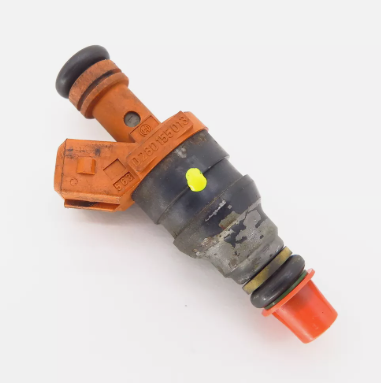
with the original part number 0-280-155-013
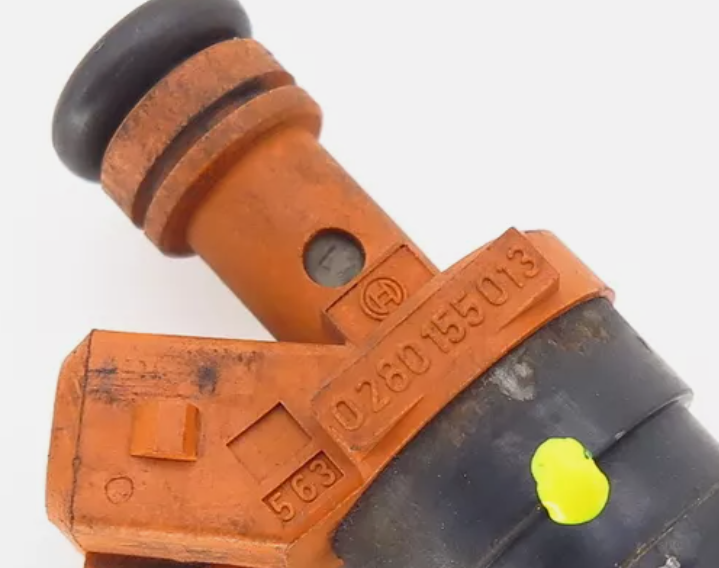
My quick examination of these on the Internet is not looking cheap. But the search continues.
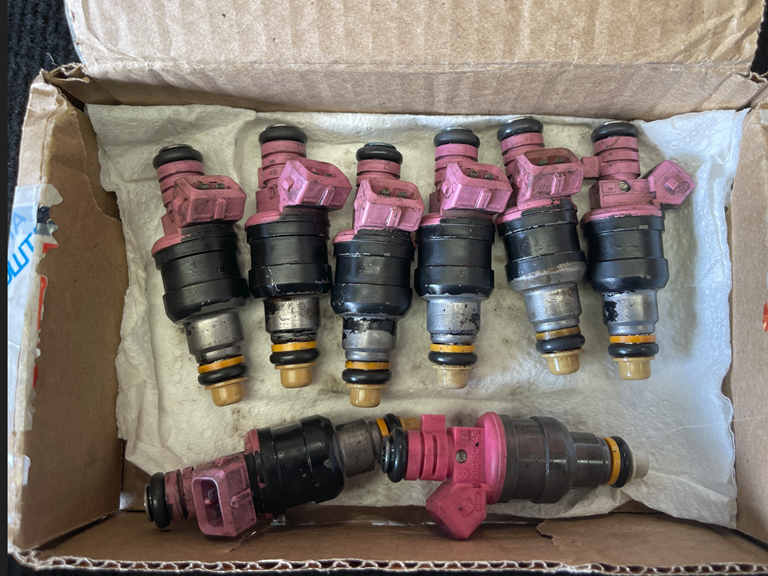
So I went and bought some replacement injectors as shown above. Unfortunately, this is the response I received from Ferrari when I took them there to be checked:
We have checked those injectors you have supplied us. Knee jerk reaction – they’re different, they have pink housings opposed to the standard orange. Checking the bosch numbers on them and they are different there again. These ones are 0280 150 449 which I don’t believe are compatible?
Checked anyway to see differences:
– O ring height/ position is different between OEM and supplied injectors
– Rated impedance is different, 15.5 ohm for OEM vs 16.4 ohm on supplied injectors
– Injector nozzle is different – OEM is pintle type, supplied are multi point
– Flow testing differently as well, OEM are around 82-83mm over 15 seconds, vs only 75-76ml on supplied ones.
They may physically fit, however given the differences, I don’t believe it would be an appropriate replacement.
The bosch numbers on the original injectors is 0280 155 013
According to a quick look on Internet:
So it appears the ones I found are 0280 150 449 which seem to be for a 5.2 Motronic engine not a 2.7 as I need. Seems I need any of these:
0280 155 013
0280 155 003
0280 155 869

What a challenge this is proving to be.
Tracking files:
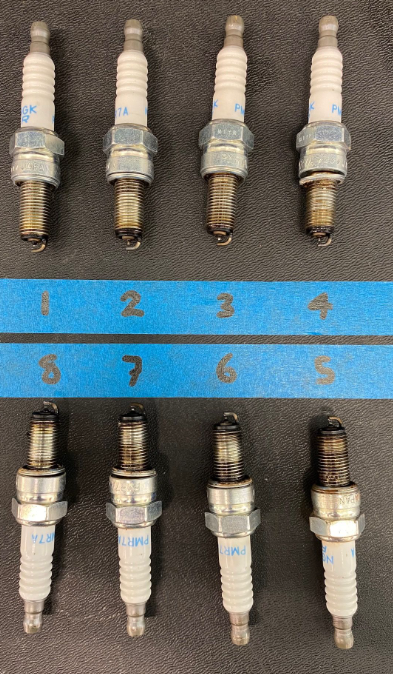

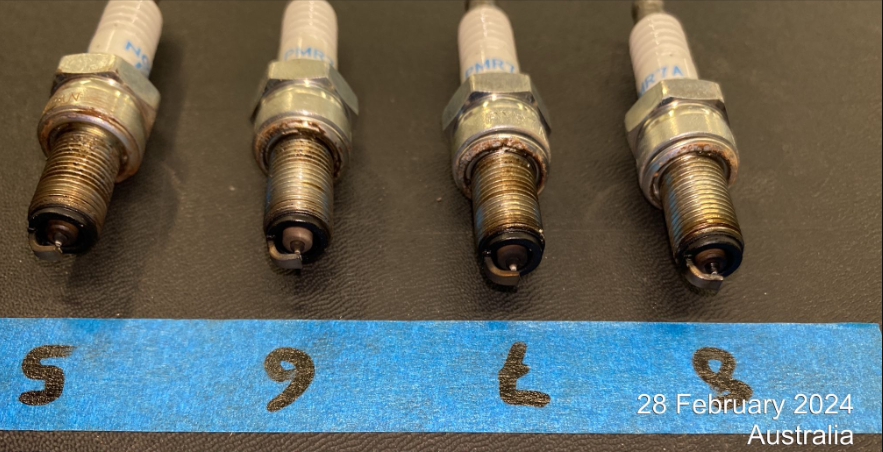
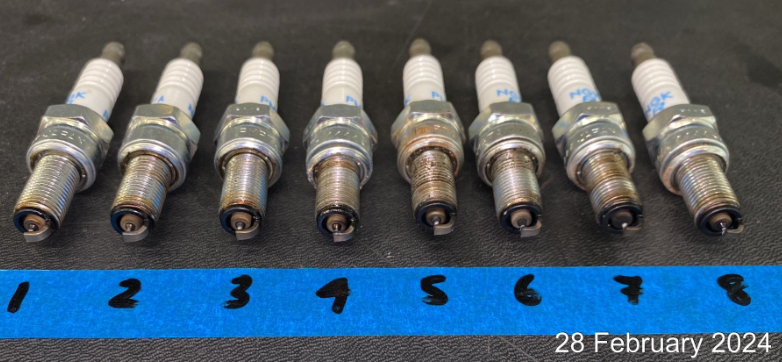
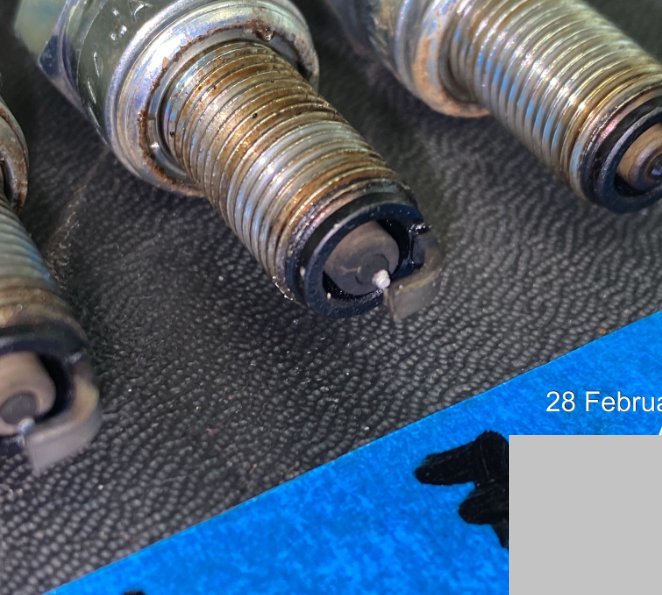
13. Removed spark plugs and visually inspected. Found the electrode insulator of cylinder 7 darker than all other spark plugs indicating the cylinder that may be running richer. There was also a minor tracking mark on the insulator. Tested spark plug function in bench tester and it is still functioning correctly.
14. Measured spark plug gaps and found they are all within the 0.6-0.7mm spec.

Cylinder wall
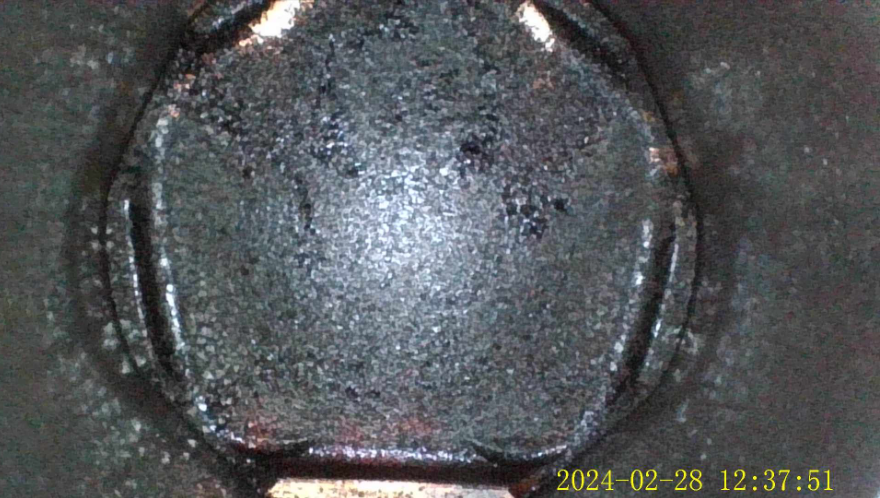
Cylinder 1

Cylinder 2
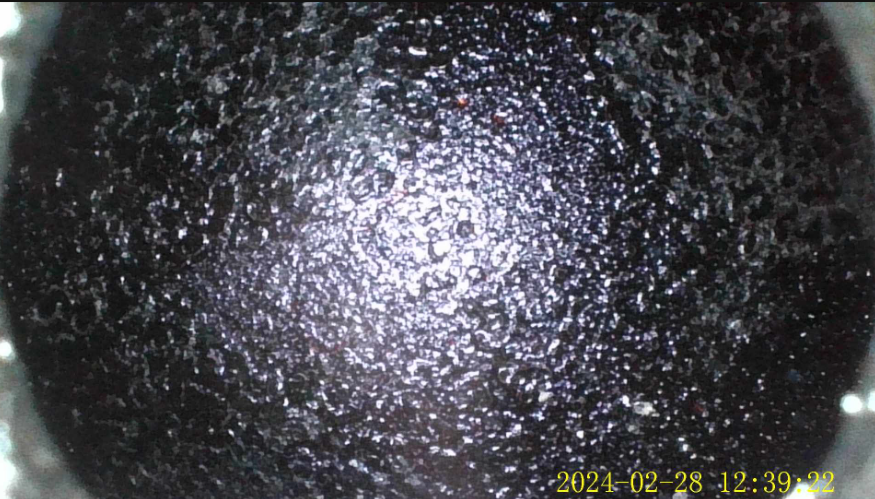
Cylinder 3

Cylinder 4

Cylinder 5
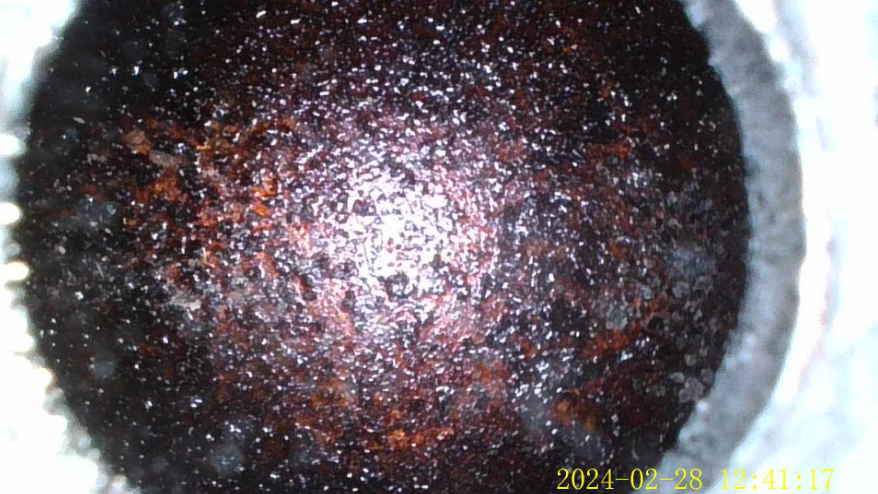
Cylinder 6
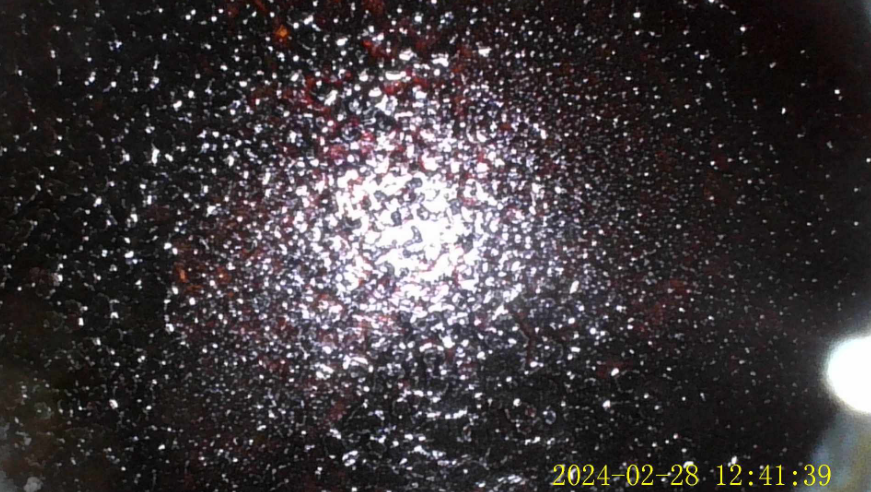
Cylinder 7
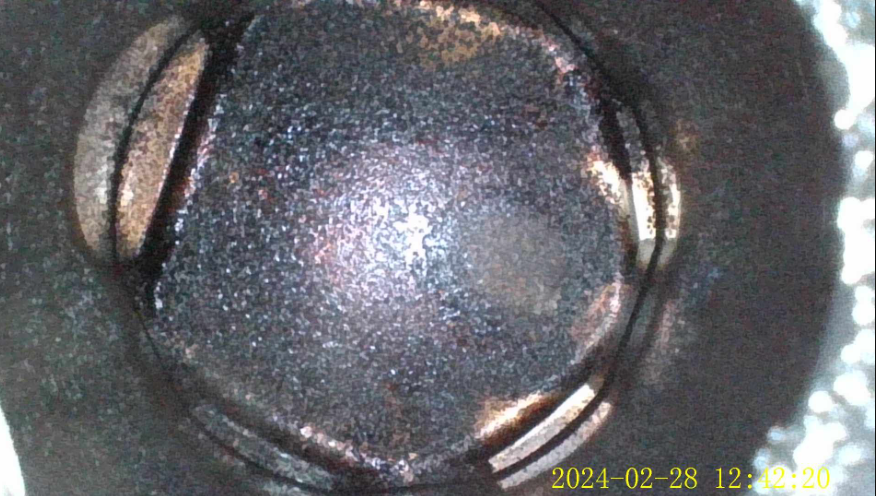
Cylinder 8
15. Using a borescope through the spark plug well, inspected and found no major visual discrepancies between individual cylinders.
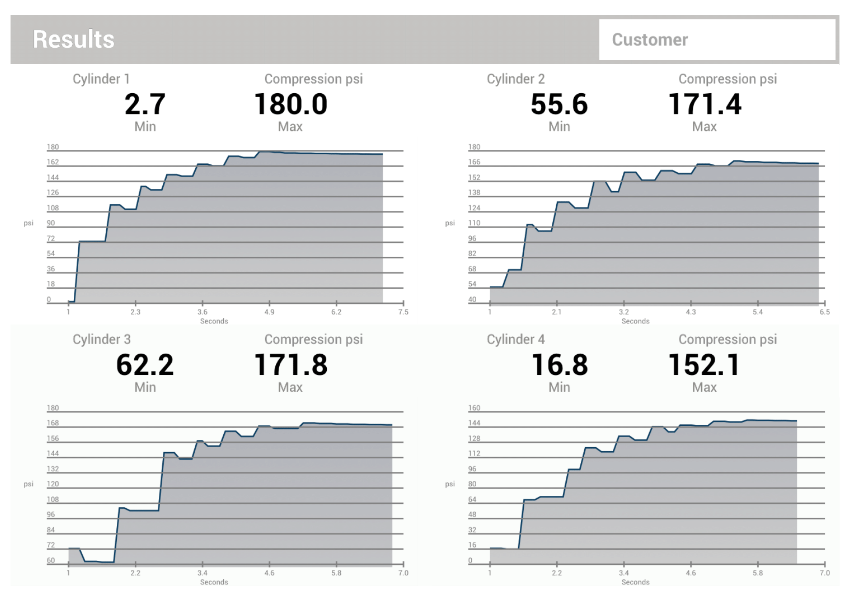
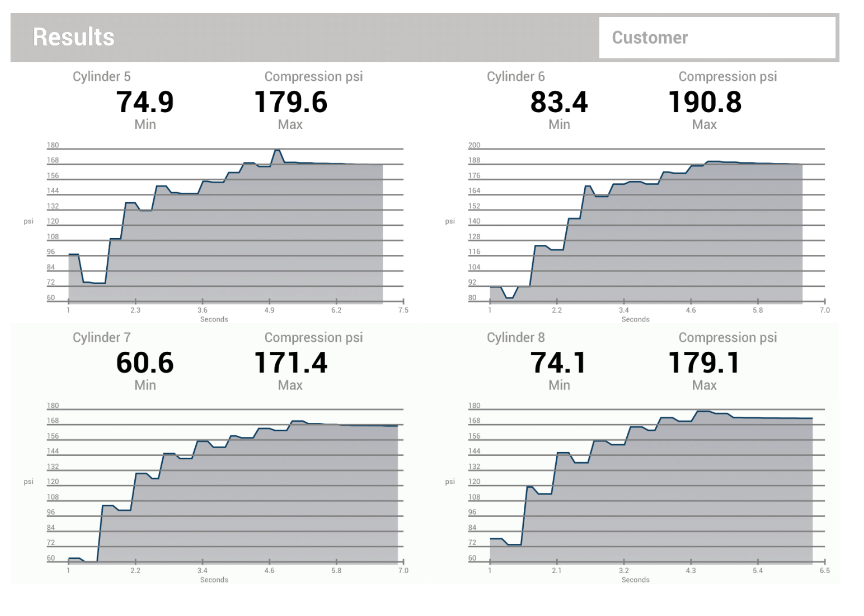
16. Carried out compression testing of all cylinders. Repeated test for cylinder 4 which had the lowest reading and cylinder 6 which had the highest reading and found similar readings in second tests. Values are fairly consistent and unlikely to be the cause of the reported fault symptoms.
17. Carried out cylinder leakage test of cylinder 4 and observed approx. 12-15% leakage which is in the allowable range.
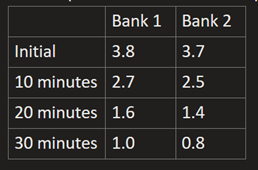
9. Carried out cold start and confirmed engine easy to start. Switched back off and carried out fuel pressure loss check over half hour period with a cold engine – Bank 1 dropped to 1.9bar and Bank 2 dropped to 1.7 bar.
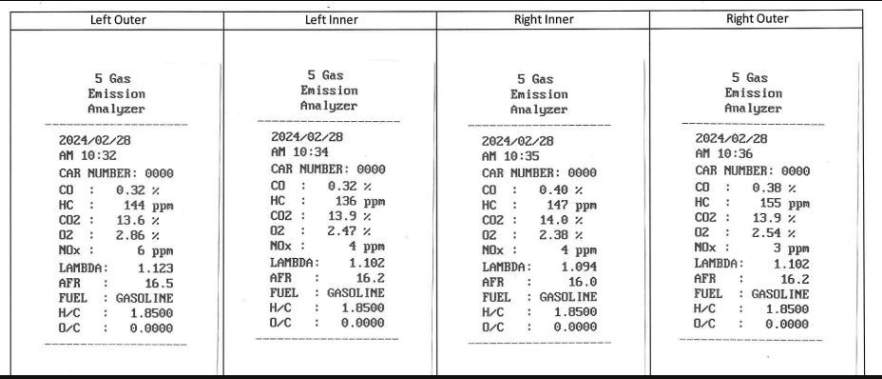
10. Brought engine to operating temperature and then took readings of exhaust gas with analyser from all four tail pipes. HC and O2 values higher than expected indicating potential misfires.
11.Switched off hot engine and then restarted after 30 seconds without the chance for heat soak etc. Engine start consistent with the ease of a cold start.
12. Installed ignition indicators in line between leads and spark plugs and confirmed ignition indication at all 8 cylinders.

Previous list of items checked on F355 to resolve ‘chuggs’:
Additional items checked on the F355 to resolve ‘chuggs’:
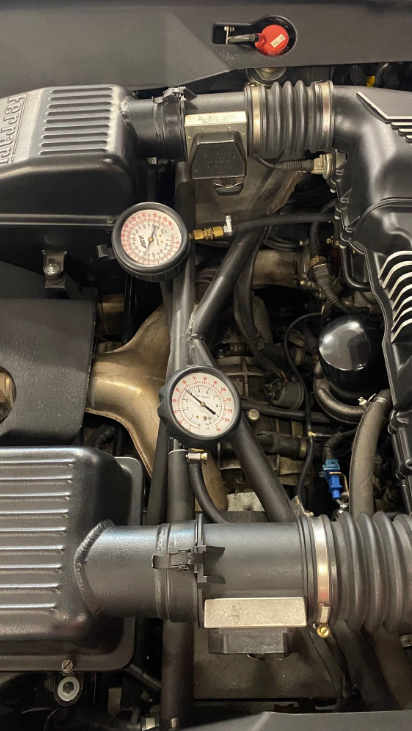
4. Fuel pressure test
Carried out fuel pressure measurements at both rails. 3.8bar at Bank 1 and 3.7 bar at Bank 2. Values are acceptable and just slightly over the 3.4+/1 0.2 spec.
5. Thermal tests
Exhaust Bank 1
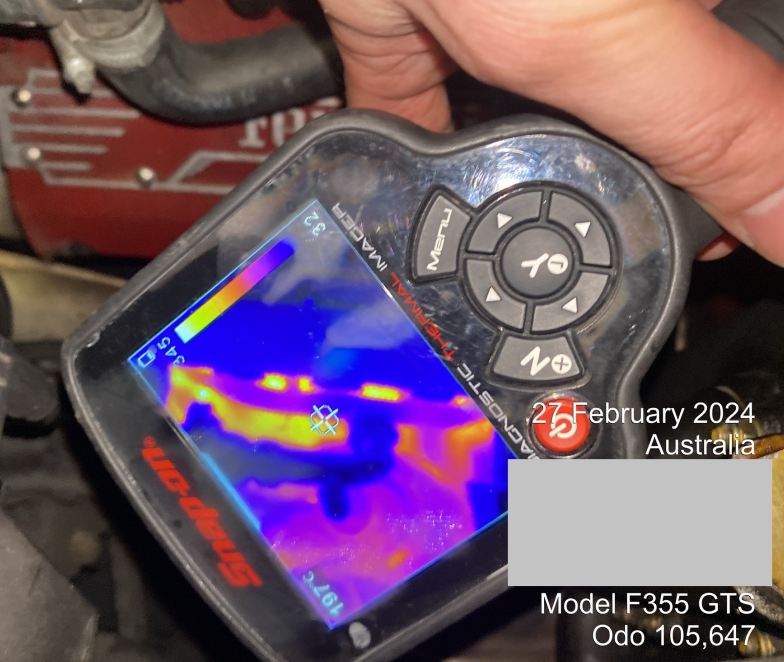
Exhaust Bank 2

Measured temperature of exhaust system during warm up and once operating temperature reached. No major discrepancies between individual cylinders of the same bank.
Found on first test Bank 2 headers slightly cooler than Bank 1 however during later testing found Bank 1 at approx. 400degC and Bank 2 at approx. 450degC.
Inlet bank 1

Inlet bank 2
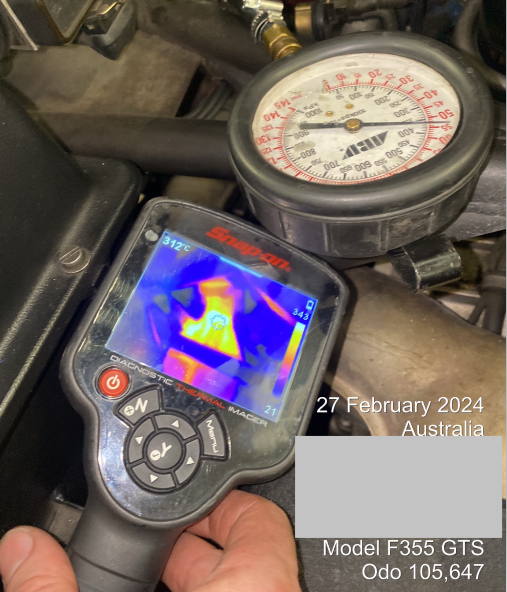
Measured temps of inlet and outlet and found Bank 2 cat slightly cooler during warm up than Bank 1
Outlet cat bank 1
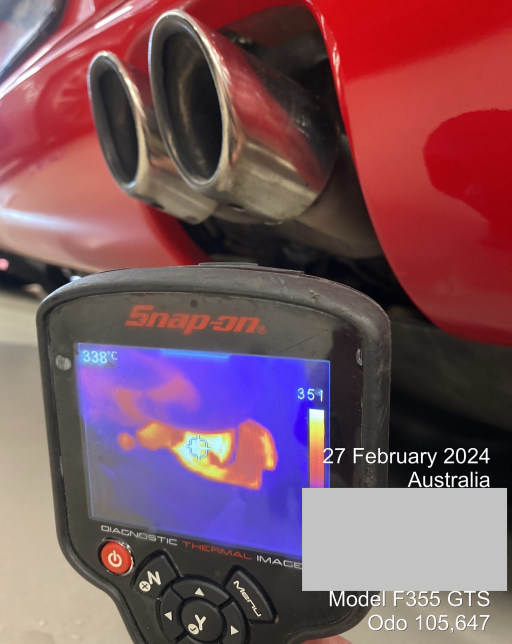
Outlet cat bank 2
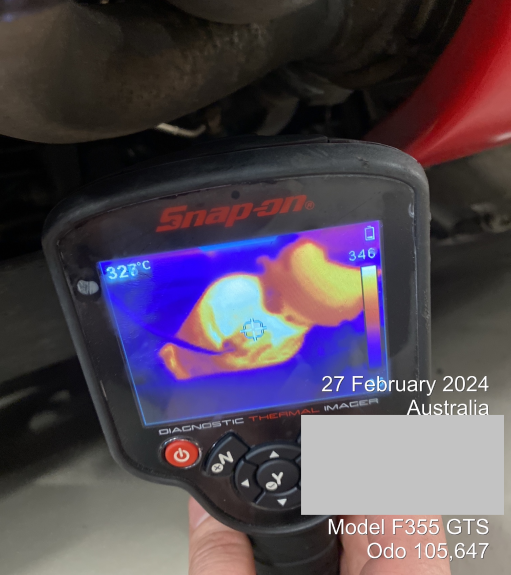
and outlet temps were consistent.
6. Fuel pressure at operating temperature
Switched off engine after reaching operating temperature and observed over 30 minute period and found the values are out of spec for allowable pressure loss over 1 hour 2.7 +/- 0.3bar (Note: Non return valve spec is 1.5bar).
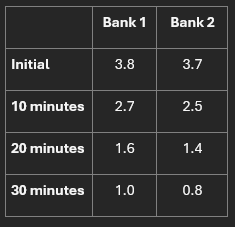
7. After half hour period started engine and confirmed an extended crank period.
8. Removed vacuum lines from fuel pressure regulators at the rails. No fuel evident at vacuum lines. Used vacuum generator on the diaphragm and then monitored for vacuum loss. No evidence of loss.
Updated tracking files:
I’ve decided that I am going to track all the issues, testing, etc that my car has/is undergoing and create a master list(s) of all this to make it easier to try and determine what has been overlooked and prevent duplicate efforts as I try and resolve the ‘chugging’ issues my F355 is experiencing. Thus, I have created the following online spreadsheets that you should also be able to view:
I’ll update each as I go along so that everything is in a single place that people can view if needed. If you have any feedback or suggestions for me on what has or hasn’t been checked please let me know and I’ll add to the. Let’s apply the ‘hive’ mind here to help resolve the issues. It may also help others down the track.
So let’s get the ball rolling with the results as well:
1. Checked function of both Check Engine Lights and both Slow Down lights – ok
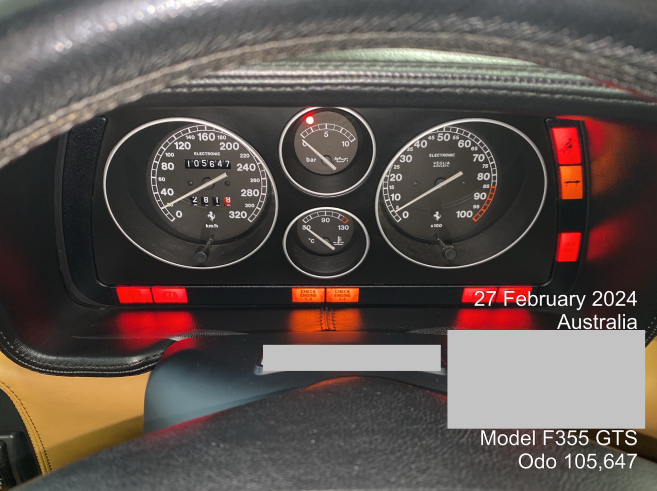
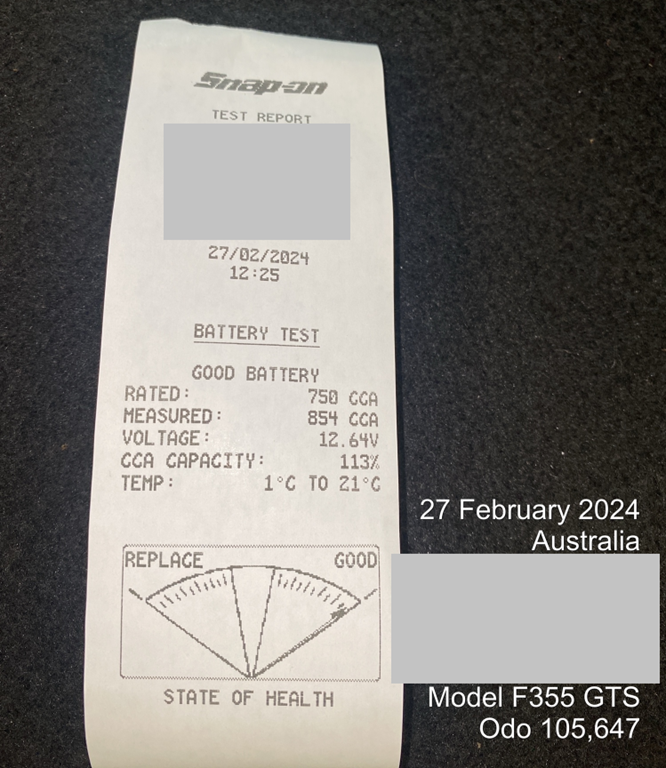
2. Carried out load test of battery – passed
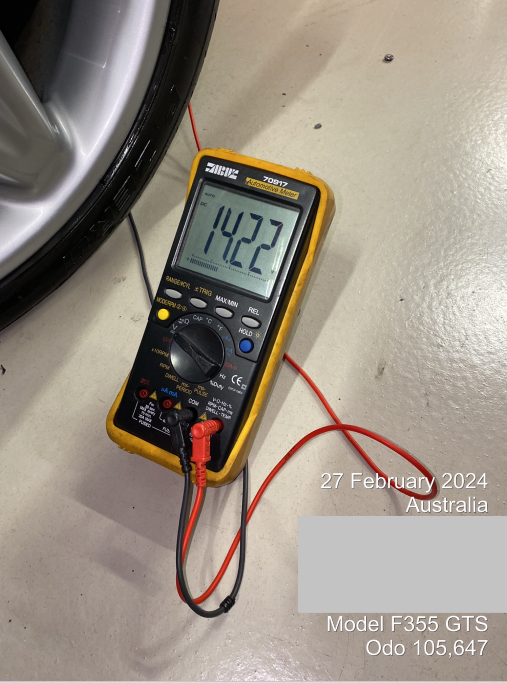
3. Checked charging system and confirmed alternator operating correctly with engine running. Output voltage approx. 14.0-14.2v. Noticed engine not running smoothly, slightly rough idle.
Summary
1. Dash lights = Good
2. Battery = Good
3. Alternator = Good
Issue detected – slightly rough idle
Online spreadsheets updated.

Given that I get lots of questions from readers about my ‘chugging’ issues in regards to checking this and that, so here is the report that Ferrari provided me initially when I brough the car to them a few months back. I’ll post more from the time line soon.
These are the findings on the F355, thus far.
 Love the F355