Tracking files:
18. Carried out leak testing of the intake system using a smoke machine. Observed smoke emerging around the inlet pipe collars for cylinder 2 and 7, with the more pronounced leak at cylinder 7
19. Lined up timing paint mark of Bank 1 exhaust cam with timing case cover inspection window. With this mark lined up the Bank 2 intake cam is also lined up. Noticed mark for Bank 1 intake cam sits slightly out of window in the direction away from the exhaust cam. Bank 2 exhaust cam sits slightly out of window in the direction towards the intake cam.
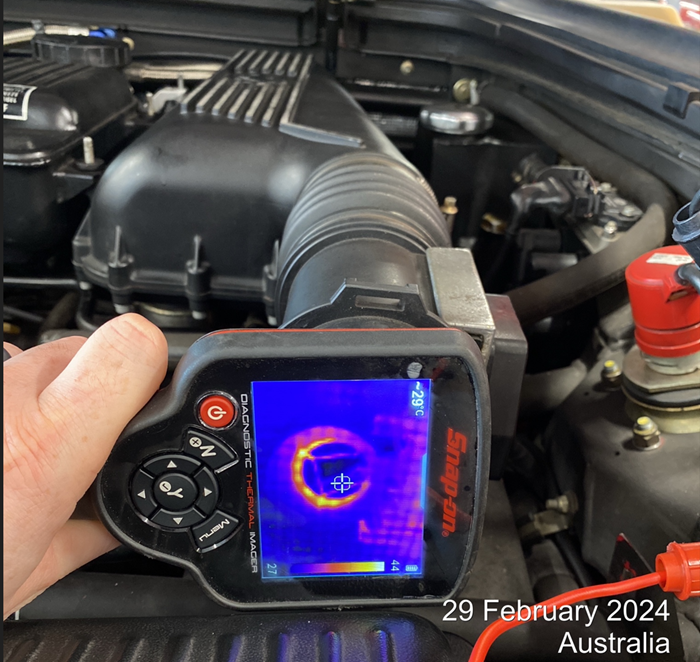
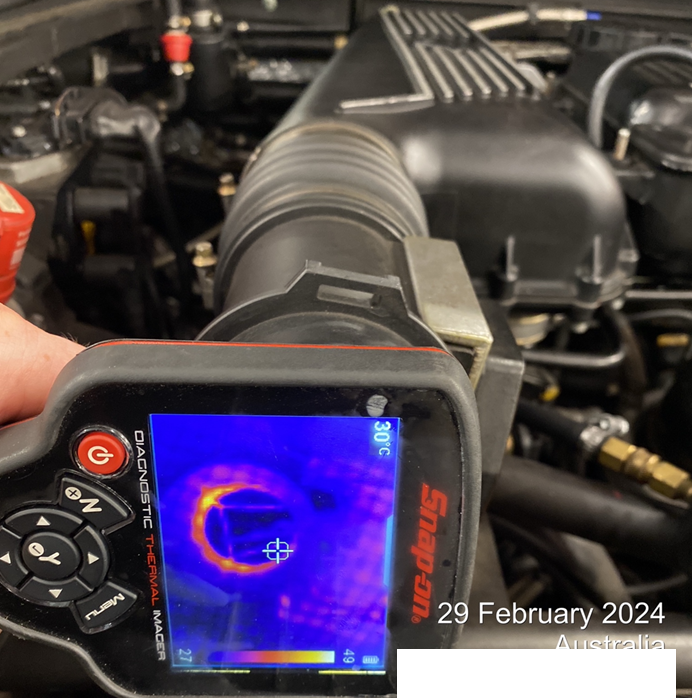
20. Used thermal camera on the hot film air flow meters and observed similar readings between both sensors of approx. 50degC.
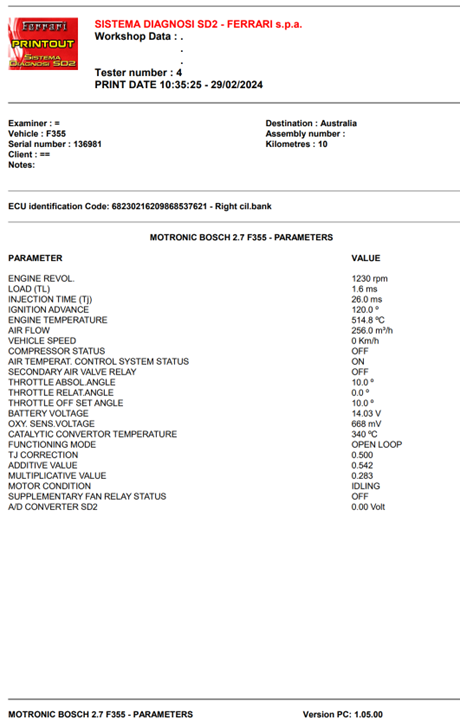
Bank 1
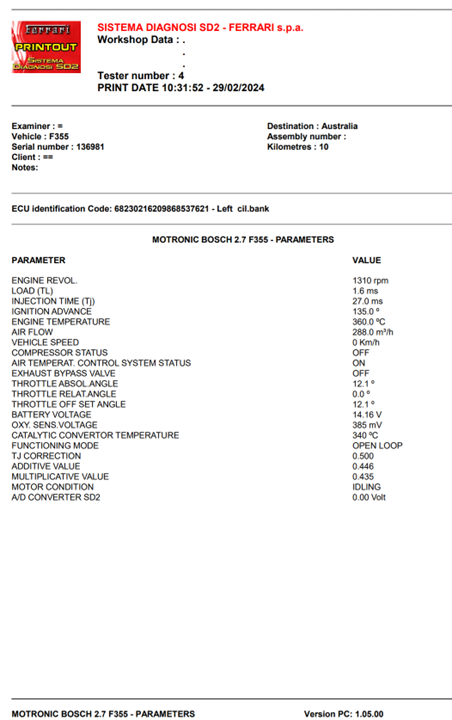
Bank 2
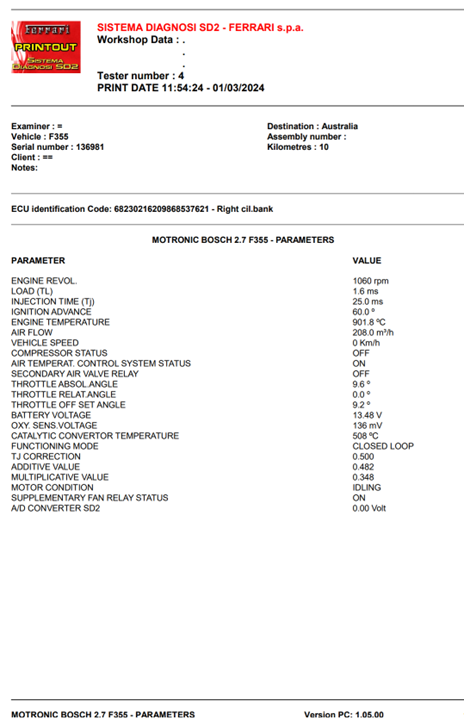
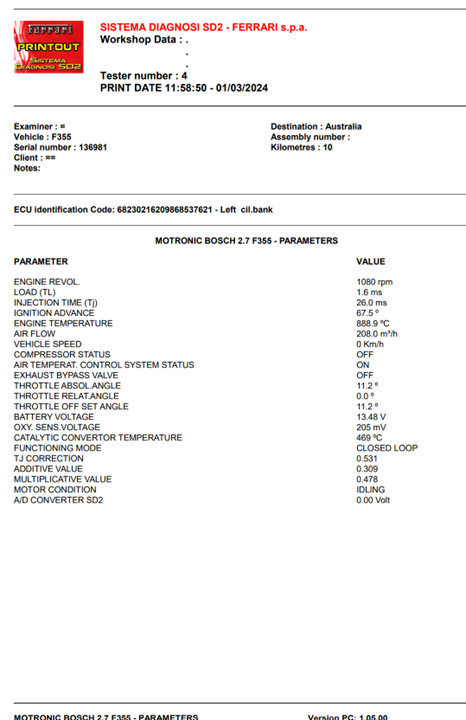
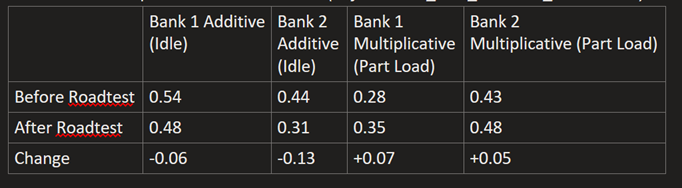
22. Ran parameter report with engine at idle and compared Bank 1 and Bank 2 readings. The engine temperature values displayed are not plausible (Bank 1 showed 514degC and Bank 2 showed 360degC). Additive fuel trim at 0.54 for Bank 1 and 0.44 for Bank 2 and Multiplicative at 0.28 for Bank 1 and 0.43 for Bank 2. Confirmed function mode changed from Open Loop to Closed loop once engine at operating temperature.
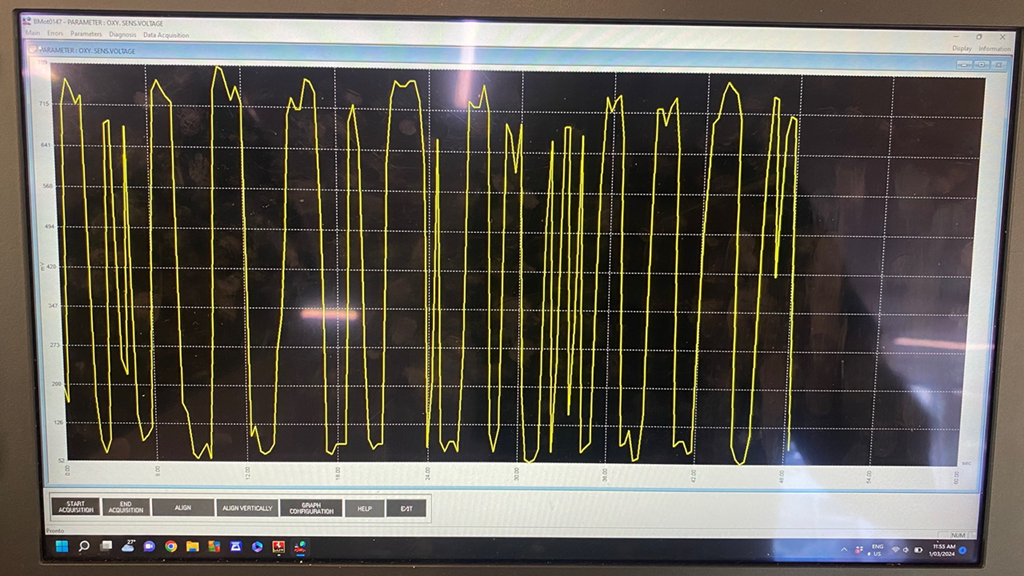
23. Ran data acquisition and cross-checked catalytic converter temperatures with thermal camera and they are plausible. Checked function of air flow and confirmed trace indicates increased air flow with increased engine RPM. Ran engine at approx. 3,000RPM and monitored readings for both sensors. Bank 1 approx. 525m3/hr and Bank 1 approx. 475m3/hr. Oxygen sensors both fluctuate correctly between lean and rich however the pattern has some anomalies.
24. Deleted errors from both Motronics. Removed all test equipment and re-assembled engine bay for road testing.
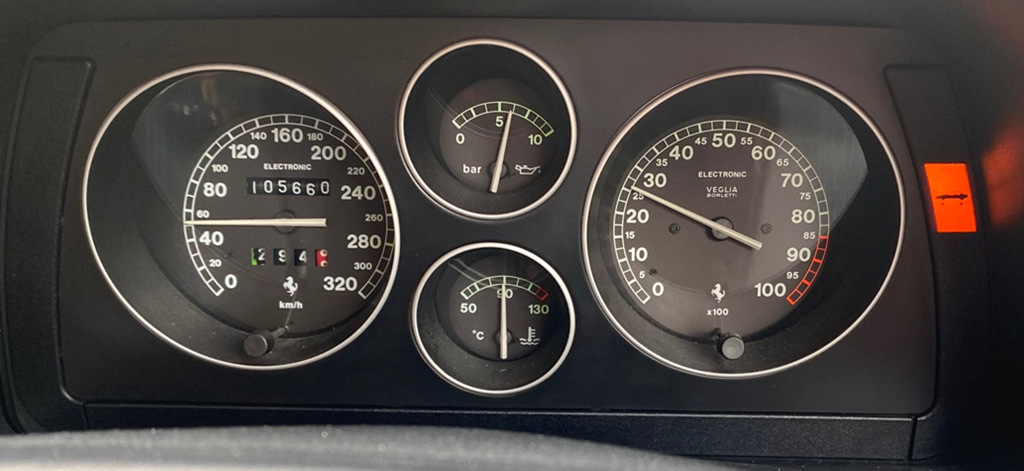
25. Roadtested, no engine related warning lights came on however suspension warning light came on after approx. 15 minutes of driving. Slightly rough idle evident throughout road test, no loss of power and was able to accelerate up hills in high hear. Found if coasting with no accelerator pedal input and then applying a very small amount of input there is a brief and minor hesitation.
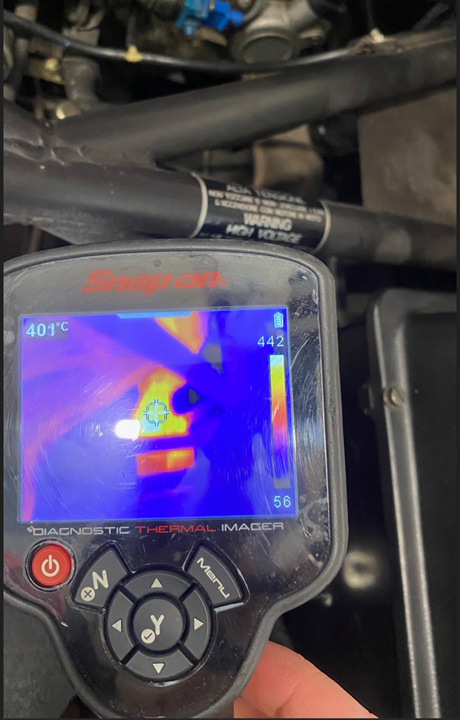
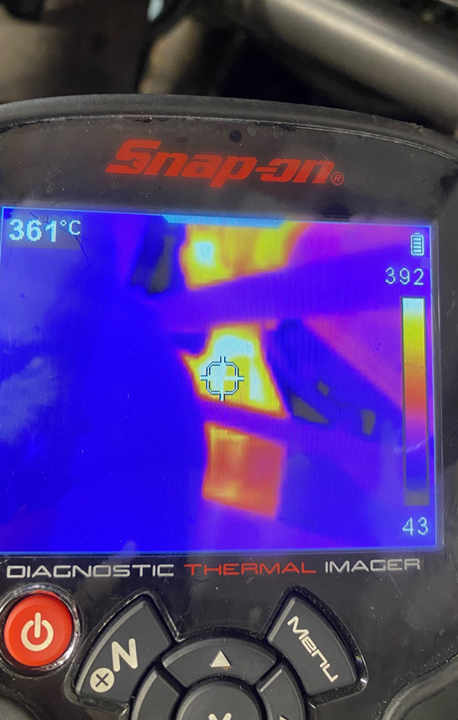
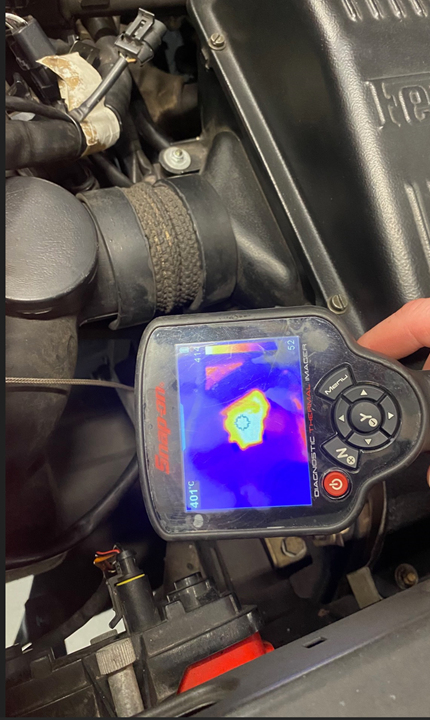
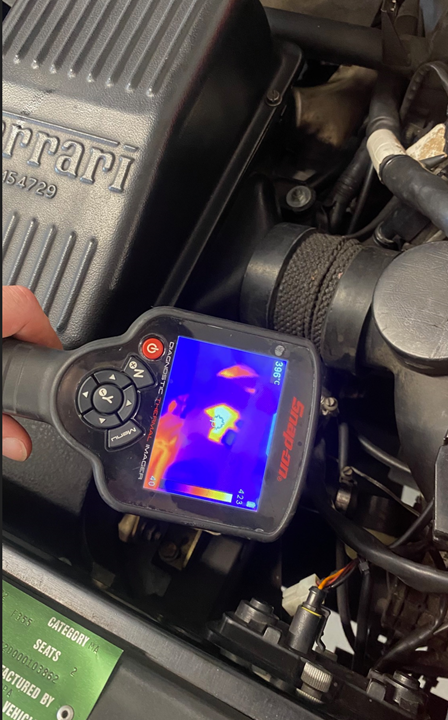
26. After roadtest used thermal camera to inspect exhaust system. No discrepancies between individual cylinders. Found Bank 1 headers at approx. 380degC and Bank 2 headers at approx. 420degC. Bank 1 cat inlet hotter though at 440degC compared to 390degC for bank 2. The outlet temperature of both cats was even at 420degC.
27. Repeated exhaust gas analysis testing post roadtest. CO and CO2 readings have reduced however HC has significantly increased, O2 is fairly consistent.
Bank 1
Bank 2
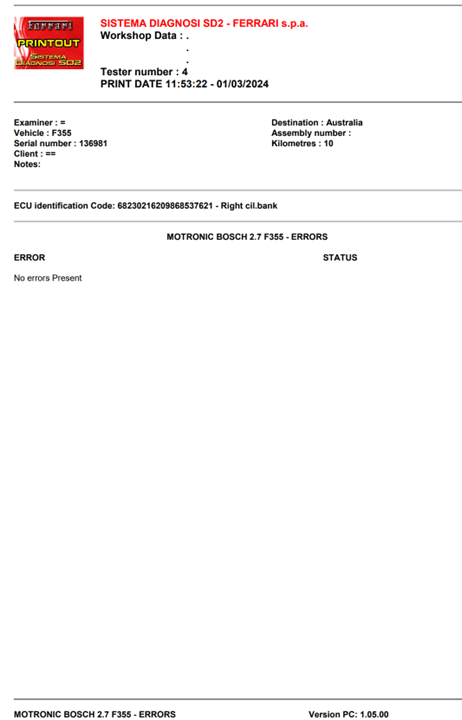
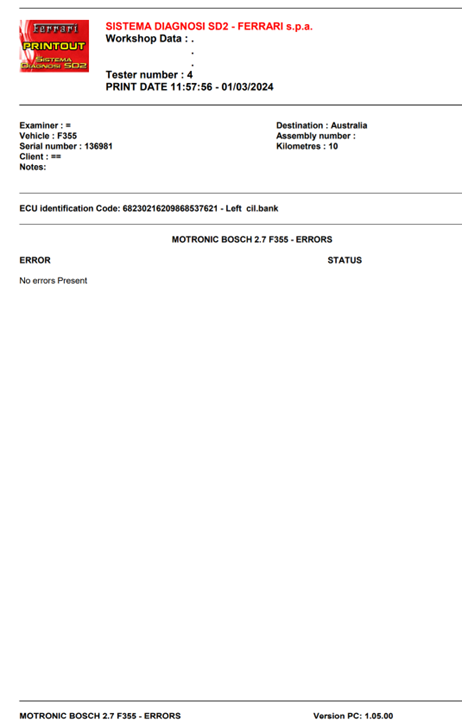
28. Checked both Motronic ECUs for errors post road test – no errors stored.
Bank 1
Bank 2
29. Read parameter report at idle post road test and compared. Checked the effect the road test and hot idle period had on fuel trims.
Bank 1
Bank 2
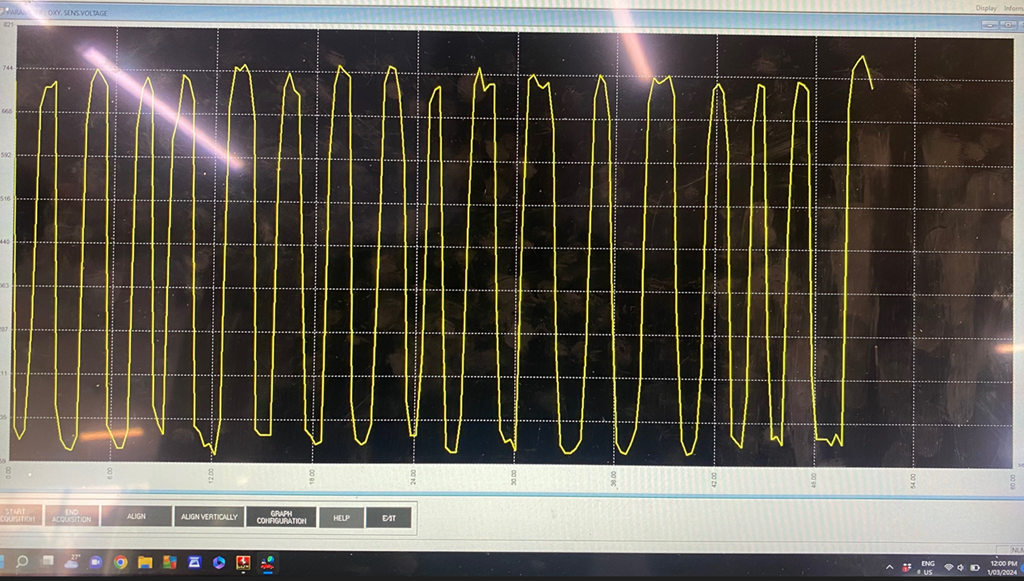
30. Repeated data acquisition of oxygen sensors post road test and found a more stabilised reading than what was originally observed.
31. Switched off engine and left for 45 minutes. Started and found engine still able to be started however there was a slightly extended crank period.
32. Road tested again after the extended crank. Slightly rough idle however no lack of power.
Recommendations
Although a number of anomalies have been observed the best course of action from here will be
- Rectifying the air leaks at the intake manifold and then re-testing for any further leaks. The Motronic is trying to compensate for this (can be seen by the increased multiplicative fuel trim) and may well be inducing further problems. With the manifold raised it would be advisable to check the synchronisation between the throttle butterflies.
- Further investigation of the fuel pressure loss occurring after engine shut down. Preliminary testing ruled out a leak through the pressure regulator vacuum lines. The most likely cause would be leaking injectors flooding the cylinders. This would explain why it is hard to start the engine when hot if left for a 30-60 minute period but starts easily if restarted straight away when or if left for an extended period allowing the fuel to evaporate.
- Further testing, including measurements at the ECUs, depending on engine operation after the above two points.

 Love the F355